
Interview with Sexual Health Expert - Dr. Leah Tidey
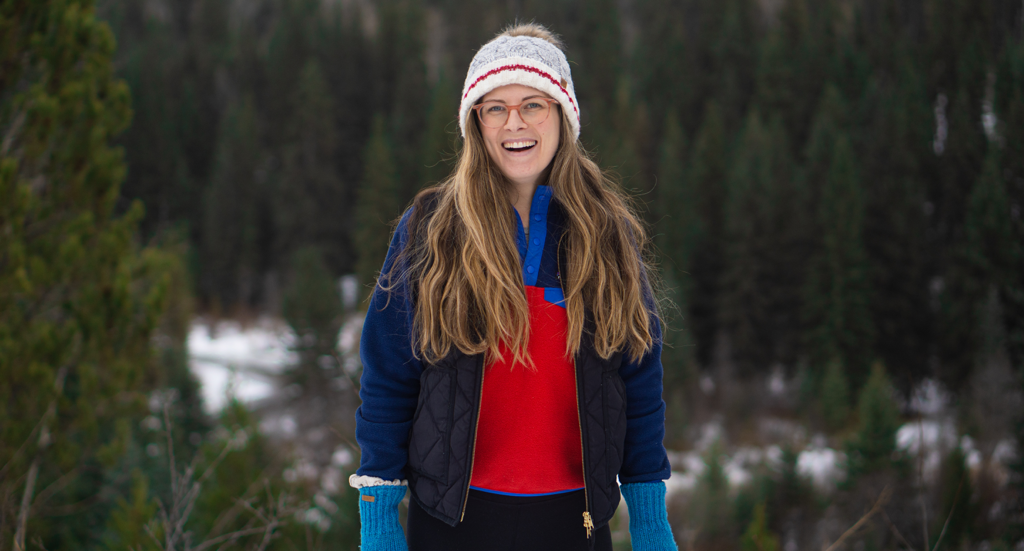
One of our goals for 2021 is to start featuring a variety of new voices on this blog! We’ve started an interview series on Lez See the World that will highlight the experiences and perspectives of different people we connect with in the travel space and the LGBTQ+ community. We’re so excited to introduce our readers to these incredible humans!Our first interview is with Dr. Leah Tidey, a bisexual podcast host and sexual health expert! We connected with Leah over on Instagram when she reached out with an invitation to have us on her podcast The Love Doctor. We immediately hit it off and had such a great time recording our episode in 2020 (you can listen to it here!). We love how inclusive Leah’s work is of the LGBTQ+ community, and how skilled she is at having stigma-free conversations around sexual health and wellness. We’re very happy to have interviewed her for the blog and are so excited to share her great insights. Keep reading for our interview with Leah! Dr. Leah Tidey is a podcaster, and sexual health and arts-based researcher. She is currently a post-doctoral fellow in the University of Victoria’s Theatre Department and at the University of British Columbia’s Canadian Institute on Inclusion and Citizenship. She received her PhD in Applied Theatre from the University of Victoria in 2020, where her research focused on using theatre to address social stigma of sexuality for youth and older adults. Dr. Tidey is also a sessional instructor at the University of Victoria and is currently pursuing her sexual health educator certification through Options Sexual Health. Her favourite job, however, is hosting The Love Doctor podcast where she shares research informed advice that can lubricate any conversation about sex.
 What can we all do to ensure that sex education in schools covers LGBTQ+ issues?We are super lucky in British Columbia that our high school curriculum is way more inclusive than a lot of other places. But if you’re in the United States, you essentially need to get your sex education outside of school. Here in B.C. we try to offer comprehensive sex ed, whereas in the US it’s primarily based on abstinence-only programs. One thing that we can do, if you’re a parent, guardian, auntie, or someone who is still in school, is to advocate for your rights. Everyone has the right to sexual health education and has the right to access health care, which includes sexual health resources, testing, and contraception. While the laws vary from country to country, almost all have a section about sexual health rights. Ask teachers and school administrators what their plan is to have sex ed taught at their schools. If there isn’t someone qualified who works at that school, there are so many great organizations that can come in and teach on a wide range of sexual health topics. If your school isn’t responsive, do your own learning so you can have these conversations with people in your lives. The biggest thing is recognizing that you’re not going to have one “talk” and be done with it. Talking about sexuality takes a lot of conversations and it’s okay if someone asks you a question that you don’t know the answer to. As long as you establish that you are a safe and reliable person to ask about sex who won’t freak out, then you can find out the answers together. We personally talk a lot about the stigma around female pleasure, queer sex, sex toys, etc. and are always trying to normalize these conversations. How can we all work to further de-stigmatize these topics?This is such a great question. De-stigmatizing topics such as female pleasure, queer sex, and sex toys requires us to have these conversations openly. The more we shy away from them, the more stigma we create about them. While you don’t have to jump straight into talking about sex toys, you can start by having a conversation about pleasure and what feels good. A great way to start a discussion is by sharing an article that you read or an interesting post, radio show, whichever. You can say “I just read the most interesting blog post the other day about female pleasure. It really opened my eyes about a few things.” I find when you can introduce a topic through another medium, it gives us space to start these conversations without feeling too vulnerable right away. And for those of you who are comfortable sharing more personally, talk to your friends and to your community online or offline about these topics. When we can start to normalize conversations about sex outside of heterosexuality, we start to move them into the mainstream where more people feel that they have the space to talk more openly. What you two do on your platforms is an amazing example of being so open about who you are, and it inspires other folks to do the same. You’ve been very open about identifying as a bisexual woman. How does being a member of the LGBTQ+ community help to inform your work?Quite honestly, I think it makes me more accessible to folks. Obviously I’m not bisexual because I want to be seen as accessible, but being bisexual to me means that I’m constantly occupying two worlds at the same time. I can “pass” as heterosexual so that gives me immense privilege. I can access heterosexual folks who think they’re “just like me” and maybe, just maybe, open their eyes to the fact that sexuality is a spectrum instead of a binary of just homosexual or heterosexual. And as a bisexual woman, I work really hard to be visible because bisexuality is so often erased, and my privilege as a white, cisgender, straight-passing woman allows me the safety to do so. I’m trying to do my part of getting people to think about their identities and sexual orientations with more nuance, and recognizing that the only “normal” thing in sexuality is diversity.Do you have any advice for bisexual women in relationships with men on how to stay connected to their queerness? If it is safe for you to do so, be open about being bisexual. I am married to a man and for a lot of folks, that negates my sexual orientation because I’ve “chosen” to be straight. Being vocal about being bisexual has been a wonderful way for me to feel connected to my queerness and honestly, connecting with you, Steph and Kaitlin, has made a huge impact on feeling like I’m part of the community. It’s especially hard with Covid-19 since we’re feeling so cut off from our communities, but being able to have these conversations makes my heart so happy. Where can our readers find you, and how can they listen to your podcast?The best place to find me is on Instagram at @dr.leahtidey. For The Love Doctor podcast, you can get it on Spotify, Apple Podcasts, or anywhere else you get your podcasts! Thanks so much and folks who are reading, Episode 12 with Steph and Kaitlin is one of my most popular episodes!
  Thank you so much Leah! If you’re interested in being interviewed or writing a guest post for Lez See the World, please contact us at info@lezseetheworld.com. We are interested in featuring a range of voices on this blog, and highlighting folks with a variety of experiences and perspectives that are different from our own. We can’t wait to hear from you!